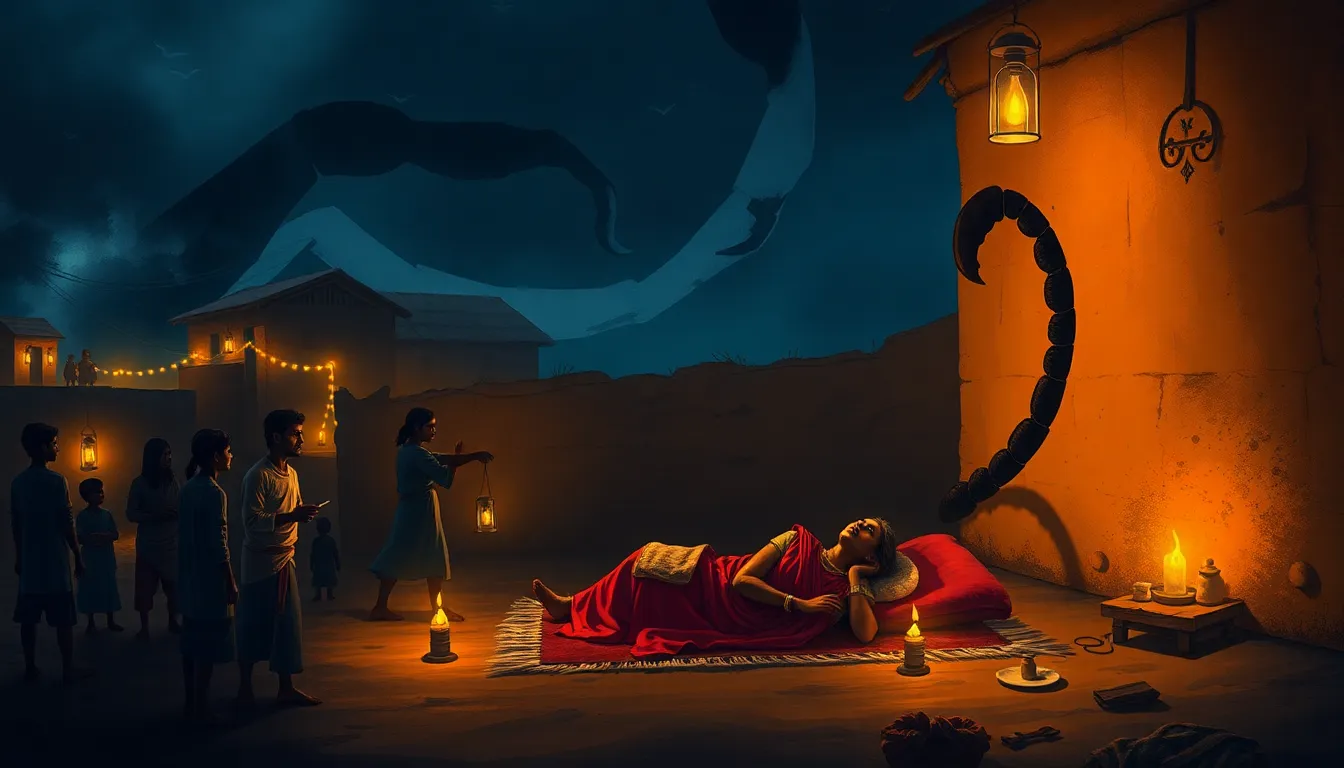
Nissim Ezekiel’s “Night of the Scorpion” stands as one of the most powerful poems in Indian English literature. This haunting narrative explores themes of superstition, love, and human nature through the lens of a childhood memory. Students studying this poem often seek comprehensive questions and answers to understand its deeper meanings and literary techniques.
Table of Contents
Historical Context and Background
About Nissim Ezekiel
Nissim Ezekiel (1924-2004) was a pioneering figure in Indian English poetry. Born in Bombay (now Mumbai) to a Jewish family, he became one of the most significant voices in post-independence Indian literature. His works often explored the complexities of Indian identity, urban life, and cultural tensions.
Ezekiel’s poetry is characterized by:
- Direct, conversational language
- Realistic portrayal of Indian life
- Exploration of religious and cultural themes
- Autobiographical elements
- Social commentary through personal experiences
When and Why “Night of the Scorpion” Was Written
The poem was written during the 1960s, a period when Indian English poetry was establishing its distinct voice. Ezekiel drew from his childhood experiences in rural India, where superstition and rational thought often collided.
The poem reflects the post-colonial Indian experience, where traditional beliefs coexist with modern thinking. This tension between the old and new forms the backbone of the narrative.
Complete Poem Analysis
Plot Summary
The poem narrates a childhood memory where the speaker’s mother is stung by a scorpion during a rainy night. The opening lines immediately establish the scene:
“I remember the night my mother
was stung by a scorpion. Ten hours
of steady rain had driven him
to crawl beneath a sack of rice.”
The incident triggers a series of reactions from villagers, who gather to help through prayers and superstitious rituals. The father, described as a rational man, desperately tries both traditional remedies and modern medicine. The mother endures the pain with remarkable patience, and when she finally recovers, her first thought is gratitude that the scorpion didn’t sting her children instead.
Setting and Atmosphere
The poem is set in a rural Indian village during the monsoon season. The heavy rain creates a dark, oppressive atmosphere that mirrors the family’s distress. The ten hours of suffering create a sense of prolonged agony and helplessness.
Key atmospheric elements include:
- Monsoon rains forcing the scorpion to seek shelter
- Dark, cramped village home
- Gathering of concerned neighbors
- Mixture of traditional and modern healing attempts
Major Themes Explored
Superstition vs. Rationality
The poem presents a stark contrast between superstitious beliefs and rational thinking. The villagers represent traditional Indian society with their prayers and ritualistic responses:
“More candles, more lanterns, more neighbours,
more insects, and the endless rain.
They sat around on the floor with
my mother in the centre, the peace of understanding on each face.”
The peasants believe in karmic justice and divine intervention, praying that the scorpion’s poison will “burn away” the mother’s previous sins. In contrast, the father embodies modern, educated thinking in his desperate search for scientific solutions:
“My father, sceptic, rationalist,
trying every curse and blessing,
powder, mixture, herb and hybrid.
He even poured a little paraffin
upon the bitten toe and put a match to it.”
Example from the poem: The peasants’ prayers and incantations contrast sharply with the father’s attempts at “powder, mixture, herb and hybrid.”
Motherly Love and Sacrifice
The mother’s reaction after recovery reveals the depth of maternal love. Despite enduring ten hours of excruciating pain, her first concern is for her children’s safety rather than her own suffering. The poem’s most powerful moment comes in these closing lines:
“My mother only said
Thank God the scorpion picked on me
and spared my children.”
This simple statement transforms the entire narrative from a story about superstition and crisis into a profound meditation on parental love and sacrifice.
Community Support and Unity
The poem showcases how rural Indian communities come together during crises. The villagers’ immediate response demonstrates their genuine concern:
“The peasants came like swarms of flies
and buzzed the name of God a hundred times
to paralyse the Evil One.”
Despite their superstitious methods, the villagers demonstrate genuine concern and solidarity. Their prayers reflect their belief in collective spiritual power to combat evil forces.
Religious and Cultural Beliefs
The poem explores how religious beliefs shape people’s responses to tragedy. The peasants’ prayers reflect their deep faith in divine intervention and karmic justice:
“They said such things happen to cleanse
the soul of our sins of previous births
and also to reduce the suffering
of the next birth.”
The villagers see the scorpion sting as part of a cosmic balance, believing that present suffering can purify past sins and reduce future pain.
Literary Devices and Techniques
Narrative Structure
Ezekiel employs a first-person narrative, making the experience more personal and immediate. The poem follows a chronological structure, moving from the incident through the community’s response to the final resolution.
Imagery and Symbolism
The Scorpion: Represents both danger and catalyst for revealing human nature Rain: Symbolizes the harsh conditions of rural life Light: Contrasts with the darkness of superstition
Language and Tone
The poet uses simple, direct language that mirrors spoken English. The tone remains objective and observational, allowing readers to form their own judgments about the events.
Irony
The poem contains subtle irony in how the “rational” father becomes as desperate as the superstitious villagers, trying every possible remedy regardless of its scientific basis.
Essential Questions and Answers
Q1: What is the central theme of “Night of the Scorpion”?
Answer: The central theme revolves around the conflict between superstition and rationality in Indian society. The poem explores how people respond to crisis situations, revealing the coexistence of traditional beliefs and modern thinking. Through the mother’s suffering, Ezekiel examines human nature, community bonds, and the power of maternal love.
Q2: How does the poet portray the villagers in the poem?
Answer: The villagers are portrayed as well-meaning but superstitious people who respond to the crisis with traditional prayers and rituals. Their immediate gathering is described vividly:
“The peasants came like swarms of flies
and buzzed the name of God a hundred times
to paralyse the Evil One.”
While their methods seem irrational, their genuine concern and community spirit shine through. They represent the collective conscience of rural India, bound by age-old beliefs and practices. Their prayers for the mother show deep compassion:
“May the sum of evil balanced in this
unreal world against the sum of good
become diminished by your pain.”
The poet doesn’t mock them but presents them objectively, allowing readers to see both their limitations and their humanity.
Q3: What is the significance of the scorpion in the poem?
Answer: The scorpion serves multiple symbolic purposes:
- It represents the harsh realities of rural life
- Acts as a catalyst that reveals different aspects of human nature
- Symbolizes the unpredictable nature of fate
- Becomes a test of faith, rationality, and love
The scorpion’s action of stinging the mother instead of the children ultimately highlights the theme of maternal sacrifice.
Q4: How does the father’s character differ from the villagers?
Answer: The father represents the educated, rational mindset in contrast to the villagers’ superstitious approach. The poet clearly establishes this contrast:
“My father, sceptic, rationalist,
trying every curse and blessing,
powder, mixture, herb and hybrid.”
He:
- Seeks scientific solutions through various medicines and remedies
- Remains skeptical of traditional prayers and rituals
- Shows desperation equal to the villagers despite his rationality
- Represents the modern Indian caught between tradition and progress
The irony is that despite being a “sceptic, rationalist,” he becomes equally desperate, even trying fire as a remedy:
“He even poured a little paraffin
upon the bitten toe and put a match to it.”
His character shows that education doesn’t necessarily make one immune to desperation during crisis.
Q5: What is the mother’s reaction after recovering, and what does it reveal?
Answer: After recovering, the mother’s first words are gratitude that the scorpion chose her instead of her children. The poem’s most powerful moment comes in these simple yet profound lines:
“My mother only said
Thank God the scorpion picked on me
and spared my children.”
This reaction reveals:
- The depth of maternal love and sacrifice
- Her selfless nature even in suffering
- The instinctive protective nature of mothers
- Her ability to find positive meaning even in pain
The word “only” emphasizes the simplicity and sincerity of her response, contrasting sharply with the elaborate prayers and desperate remedies that preceded it. This response provides the poem’s emotional climax and moral center.
Q6: How does the setting contribute to the poem’s effectiveness?
Answer: The rural setting during monsoon season creates several important effects:
- The rain forces the scorpion to seek shelter, causing the incident
- The dark, cramped conditions add to the oppressive atmosphere
- Rural setting justifies the villagers’ superstitious responses
- The isolation emphasizes the community’s importance during crisis
The setting becomes almost a character itself, influencing the events and responses.
Q7: What literary devices does Ezekiel use to enhance the poem’s impact?
Answer: Ezekiel employs several literary devices:
Alliteration: “steady rain,” “diabolic tail” Metaphor: Comparing the scorpion to evil forces Contrast: Between superstition and rationality Irony: The rational father becoming as desperate as the superstitious villagers Repetition: Emphasizing the ten hours of suffering
These devices create rhythm, emphasize key themes, and enhance the poem’s emotional impact.
Q8: How does the poem reflect Indian society and culture?
Answer: The poem serves as a microcosm of Indian society, showing:
- The coexistence of traditional and modern values
- The strength of community bonds in rural areas
- The prevalence of superstitious beliefs
- The role of religion in daily life
- The position of women in traditional families
It captures the complexity of Indian culture without judgment or bias.
Comparative Analysis
Comparison with Other Indian English Poets
| Poet | Style | Themes | Approach |
|---|---|---|---|
| Nissim Ezekiel | Direct, conversational | Urban-rural divide, identity | Objective observation |
| Kamala Das | Confessional, personal | Feminine identity, relationships | Emotional intensity |
| A.K. Ramanujan | Intellectual, complex | Tradition vs. modernity | Philosophical depth |
Night of the Scorpion vs. Other Ezekiel Poems
“Night of the Scorpion” differs from Ezekiel’s other works in its rural setting and focus on traditional beliefs. While poems like “Enterprise” deal with urban, educated experiences, this poem explores grassroots Indian culture.
Modern Relevance and Contemporary Connections
Relevance to Today’s Readers
The poem remains relevant because it addresses timeless themes:
- The tension between tradition and modernity persists in contemporary India
- Maternal love and sacrifice remain universal experiences
- Community support during crises reflects human nature across cultures
- The conflict between scientific and traditional approaches to problems continues
Educational Value
For students, the poem offers:
- Insight into Indian rural life and culture
- Understanding of post-colonial Indian literature
- Examples of effective narrative poetry
- Lessons about human nature and relationships
The poem’s accessibility makes it an excellent introduction to Indian English poetry for students worldwide.
Reading Recommendations and Further Study
Essential Reading
Students interested in exploring similar themes should read:
- “The Mahabharata: A Modern Rendering” by Ramesh Menon
- “The God of Small Things” by Arundhati Roy
- “Sacred Games” by Vikram Chandra
For more newspaper report writing techniques and literary analysis methods, students can explore additional resources.
Academic Resources
For deeper analysis of Indian English poetry, consider:
- “The Oxford Anthology of Modern Indian Poetry” edited by Vinay Dharwadker
- “Indian English Poetry: New Perspectives” by Jasbir Jain
- “Contemporary Indian Poetry in English” by Makarand Paranjape
External resources like the Poetry Foundation provide additional context and analysis of contemporary poetry movements.
Key Takeaways
Understanding “Night of the Scorpion” requires recognizing several crucial elements:
Cultural Context: The poem reflects the complexity of Indian society, where traditional beliefs coexist with modern thinking.
Universal Themes: While rooted in Indian culture, the poem explores universal themes of love, suffering, and human response to crisis.
Literary Technique: Ezekiel’s objective narrative style allows readers to form their own judgments about the events and characters.
Character Development: Each character represents different aspects of Indian society, from superstitious villagers to rational intellectuals.
Emotional Impact: The mother’s final words provide the poem’s emotional and moral center, elevating it beyond mere social commentary.
Frequently Asked Questions
What is the main conflict in “Night of the Scorpion”?
The main conflict is between superstition and rationality, embodied in the different responses to the mother’s suffering. The villagers rely on prayers and rituals, while the father seeks scientific solutions.
Why does the poet focus on the mother’s final words?
The mother’s final words reveal the poem’s central message about maternal love and sacrifice. They transform the narrative from a simple incident into a profound statement about human nature.
How does the poem reflect post-colonial Indian literature?
The poem reflects post-colonial themes by exploring the tension between traditional Indian culture and modern, Western-influenced thinking. It shows how colonial education created a divide between different approaches to life.
What makes this poem particularly suitable for students?
The poem’s accessible language, clear narrative structure, and universal themes make it ideal for students. It provides insight into Indian culture while exploring emotions and experiences that resonate across cultures.
How does the setting influence the poem’s meaning?
The rural setting during monsoon season creates the conditions for both the incident and the community’s response. It justifies the villagers’ traditional approach while highlighting the isolation that makes community support crucial.
The poem “Night of the Scorpion” stands as a masterpiece of Indian English literature, offering students a window into the complexities of Indian society while exploring universal themes of love, suffering, and human nature. Through its careful balance of observation and emotion, Ezekiel created a work that continues to resonate with readers decades after its publication.
Students studying this poem gain not only literary appreciation but also cultural understanding, making it an essential component of any comprehensive literature curriculum. The questions and answers provided here should serve as a foundation for deeper exploration and analysis of this remarkable work.