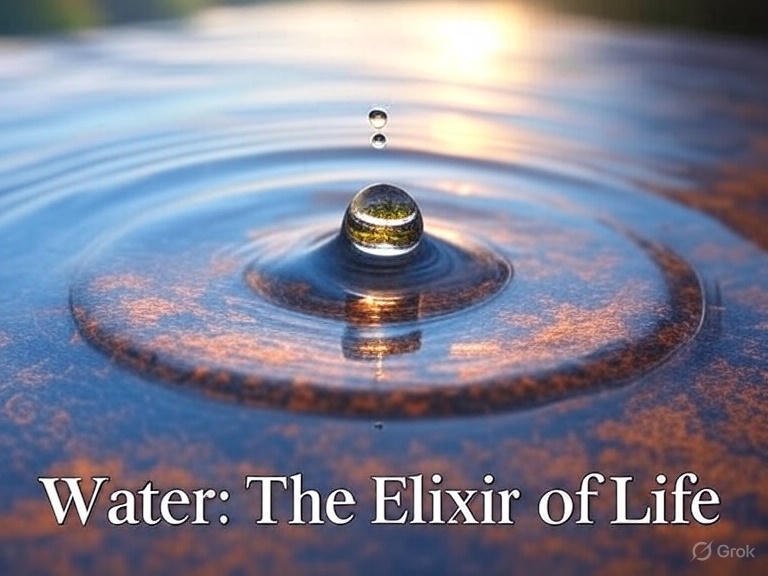
When Sir C.V. Raman penned “Water The Elixir of Life,” he revealed water’s profound significance beyond its simple chemical formula. This groundbreaking essay demonstrates how the Nobel Prize-winning scientist viewed water not just as H2O, but as the fundamental force that shapes civilizations, nurtures ecosystems, and sustains all biological processes. Raman’s scientific perspective transforms our understanding of this “commonest of all liquids” into something extraordinary.
Table of Contents
The Scientific Mind Behind the Literary Masterpiece
C.V. Raman: Pioneer of Indian Science Literature
Chandrasekhara Venkata Raman stands as one of India’s most celebrated scientists and writers. Born in 1888, he became the first Asian to receive the Nobel Prize in Physics for his work on light scattering. His literary contributions extend far beyond laboratory reports and research papers.
Raman’s unique position as both scientist and writer gave him the ability to bridge technical knowledge with accessible prose. He wrote extensively about scientific phenomena for general audiences, making complex concepts understandable to students and laypeople alike.
His essay “Water: The Elixir of Life” exemplifies this approach. Written during the mid-20th century, it reflects his deep concern about water conservation and environmental stewardship – topics that remain critically relevant today.
The Historical Context of Scientific Writing in India
The early-to-mid 20th century marked a golden period for Indian scientific literature. Writers like Raman pioneered a movement to communicate scientific ideas in engaging, literary formats. This period coincided with India’s independence movement, where scientific education and awareness became tools for national development.
Raman’s essay emerged during this backdrop of educational reform. Schools and colleges needed materials that could inspire students to appreciate science while understanding its practical applications. His work filled this gap perfectly.
The essay also reflects post-colonial India’s need to establish its own scientific voice. Rather than simply translating Western scientific texts, Indian scientists began creating original works that addressed local contexts and concerns.
Deconstructing Raman’s Literary Techniques
Metaphorical Mastery and Symbolic Language
Raman employs the metaphor of “elixir” throughout his essay with remarkable precision. The term “elixir” historically refers to a mythical substance that grants immortality or transforms base metals into gold. By calling water the “elixir of life,” Raman elevates this common substance to mythical status.
His opening lines create immediate contrast:
“Man has through the ages sought in vain for an imaginary elixir of life, the divine Amrita, a draught of which was thought to confer immortality. But the true elixir of life lies near our hands; for it is the commonest of all liquids, plain water!”
This passage demonstrates several literary techniques:
- Juxtaposition between the mythical and mundane
- Irony in finding the extraordinary within the ordinary
- Direct address to readers through inclusive language
Vivid Imagery in Water the Elixir of Life
Raman’s description of the Nile Valley creates one of literature’s most striking geographical contrasts. He places readers directly on the boundary between the Libyan Desert and the fertile Nile Valley, forcing them to witness water’s transformative power firsthand.
The imagery shifts dramatically from “billowing sand without a speck of green” to areas “teeming with life and vegetation.” This stark juxtaposition serves as concrete evidence for his thesis about water’s life-giving properties.
His descriptions of South Indian rain-fed tanks provide regional context that resonates with local readers. By connecting global examples with local landscapes, Raman makes his message personally relevant to his audience.
Scientific Precision Meets Poetic Expression
Raman maintains scientific accuracy while crafting beautiful prose. He explains complex geological processes – how the Nile creates fertile soil through silt deposits – in language accessible to general readers.
His discussion of water’s role in plant physiology remains scientifically sound while avoiding technical jargon. This balance between precision and accessibility became a hallmark of quality science writing.
The essay demonstrates how scientific literature can achieve both educational and aesthetic goals without compromising either objective.
Central Themes and Their Literary Significance
The Paradox of Abundance and Scarcity
Raman explores water’s fundamental paradox: it’s simultaneously the most common and most precious substance on Earth. This theme runs throughout the essay, creating tension between water’s ubiquity and its critical importance.
He writes about water being “the commonest of all liquids” while simultaneously describing its “amazing properties.” This paradox forces readers to reconsider their relationship with everyday substances.
The theme gains urgency through examples of abundance (the Nile Valley) and scarcity (the Libyan Desert). These contrasts demonstrate how water availability determines the fate of entire civilizations.
Human Responsibility and Environmental Stewardship
Raman’s essay anticipates modern environmental consciousness by decades. He emphasizes human responsibility for water conservation and management long before environmentalism became mainstream.
His discussion of South Indian tanks reveals concern about neglect and mismanagement. He describes tanks as “shallow and often misused,” highlighting human failure to properly maintain water resources.
The essay calls for active stewardship rather than passive consumption. Raman argues that understanding water’s importance should translate into protective action.
The Unity of Science and Aesthetics
Raman refuses to separate water’s scientific properties from its aesthetic appeal. He describes water’s beauty in streams and ponds while simultaneously explaining its role in agriculture and geology.
This integration challenges false divisions between scientific and humanistic perspectives. Water serves both practical and aesthetic functions, and Raman argues we must appreciate both aspects.
His approach influenced later science writers who sought to combine analytical rigor with literary beauty. The essay demonstrates that scientific writing can be both informative and inspirational.
Water’s Role in Indian Literature and Culture
Ancient Texts and Sacred Waters
Indian literature has always revered water as sacred and life-sustaining. Ancient texts like the Vedas contain numerous hymns praising water’s purifying and nourishing properties. Raman’s essay connects to this tradition while providing modern scientific context.
The concept of “Amrita” that Raman references comes directly from Hindu mythology, where this divine nectar grants immortality to gods. By identifying water as the real Amrita, he bridges ancient wisdom with contemporary understanding.
Rivers feature prominently in Indian epics like the Ramayana and Mahabharata, often as divine entities worthy of worship. Raman’s scientific perspective doesn’t diminish this reverence but rather explains why such reverence makes sense.
Colonial Period Water Literature
During British colonial rule, water management became a critical administrative concern. Colonial writers often focused on irrigation projects and flood control as symbols of technological progress and civilizing missions.
Raman’s essay subtly challenges colonial narratives by emphasizing indigenous knowledge about water conservation. His discussion of traditional South Indian tank systems highlights local expertise that predates British involvement.
The essay presents an Indian scientist’s perspective on water management, asserting intellectual independence from colonial frameworks while acknowledging global scientific principles.
Post-Independence Environmental Writing
Raman’s work anticipated the environmental literature that flourished after Indian independence. Writers like Anita Desai and Arundhati Roy would later explore water’s cultural and ecological significance in fictional contexts.
His essay established precedents for combining scientific accuracy with literary expression in Indian environmental writing. This approach influenced educational curricula and popular science communication.
The work also connected local environmental concerns with global scientific understanding, creating a model for addressing universal themes through regional examples. Understanding environmental literature helps students appreciate broader literary movements, much like analyzing character development in contemporary Indian fiction reveals evolving narrative techniques.
Contemporary Relevance and Modern Applications
Climate Change and Water Security
Raman’s warnings about water conservation have gained new urgency in the context of climate change. His observations about soil erosion and agricultural sustainability directly relate to current environmental challenges.
Modern readers can apply his insights about water management to contemporary issues like drought management, flood control, and sustainable agriculture. His emphasis on preventing soil erosion remains critically relevant for climate adaptation strategies.
The essay’s discussion of rainfall patterns and seasonal dependence speaks directly to current concerns about changing precipitation patterns due to global warming.
Urban Planning and Water Infrastructure
Raman’s analysis of traditional tank systems offers lessons for modern urban planners. His emphasis on water collection and storage provides alternatives to purely technological solutions for water security.
Contemporary cities struggling with water supply can learn from his observations about natural water management systems. His integration of aesthetics with functionality suggests approaches to urban design that serve both practical and cultural needs.
The essay’s emphasis on maintaining existing water infrastructure rather than constantly building new systems offers sustainable alternatives to resource-intensive development models.
Educational Philosophy and Scientific Communication
Raman’s approach to science communication remains highly relevant for modern educators. His ability to make complex concepts accessible without oversimplification provides a model for contemporary science writing.
The essay demonstrates how scientific education can inspire rather than simply inform. By connecting water science to broader questions of beauty, meaning, and responsibility, Raman shows how education can shape values alongside knowledge.
Modern environmental education programs can benefit from his integration of scientific facts with aesthetic appreciation and ethical responsibility.
Comparative Analysis: Raman and Contemporary Writers
| Aspect | C.V. Raman | Modern Science Writers | Traditional Literature |
|---|---|---|---|
| Approach | Scientific precision with poetic language | Often technical focus | Primarily aesthetic |
| Audience | General educated public | Specialized or popular | Literary audiences |
| Purpose | Education and inspiration | Information transfer | Artistic expression |
| Cultural Context | Indian independence era | Global environmental crisis | Various historical periods |
| Literary Style | Descriptive prose with scientific accuracy | Varied styles | Emphasis on imagery and metaphor |
Reading Recommendations and Further Study
Essential Scientific Literature
Students interested in Raman’s approach should explore other works by Indian scientist-writers. Jagadish Chandra Bose wrote extensively about plant consciousness, combining rigorous research with accessible prose.
Contemporary writers like Vandana Shiva continue Raman’s tradition of linking scientific understanding with environmental activism. Her work on water democracy directly extends themes Raman introduced.
International examples include Rachel Carson’s “Silent Spring” and Aldo Leopold’s “A Sand County Almanac,” which demonstrate similar integration of scientific knowledge with literary expression.
Environmental Literature Collections
Modern environmental writing anthologies often include Raman’s essay alongside works by Thoreau, John Muir, and contemporary writers. These collections demonstrate how environmental consciousness evolved across different cultures and time periods.
Reading these collections helps students understand how scientific literature contributed to broader environmental movements. The connections between literary expression and political action become clear through historical survey.
Academic Resources for Deep Study
University courses in science communication often use Raman’s essay as an exemplar of effective science writing. Students can access scholarly articles analyzing his literary techniques and scientific accuracy.
Environmental history courses examine how writers like Raman influenced policy discussions about resource management. His work appears in studies of colonial and post-colonial environmental thought.
Literature courses focusing on Indian writing in English frequently include the essay as an example of early scientific literature that helped establish Indian intellectual independence.
For students exploring broader themes in literature, examining how writers address social and environmental concerns provides valuable context, similar to studying narrative techniques in contemporary works.
Frequently Asked Questions
What makes C.V. Raman’s writing style unique in scientific literature?
Raman combines rigorous scientific accuracy with poetic language and vivid imagery. He uses metaphors and contrasts to make complex concepts accessible while maintaining scientific precision. His integration of local examples with universal principles creates a distinctive voice that bridges technical knowledge and literary expression.
How does “Water: The Elixir of Life” reflect the historical context of its time?
The essay reflects post-colonial India’s need to establish scientific independence while addressing practical concerns about resource management. Written during India’s nation-building period, it emphasizes indigenous knowledge about water conservation while engaging with global scientific understanding.
Why is this essay still relevant for modern environmental discussions?
Raman’s emphasis on water conservation, soil erosion prevention, and sustainable agriculture directly addresses current climate change challenges. His observations about seasonal rainfall dependence and traditional water management systems offer lessons for contemporary environmental policy and urban planning.
How can students apply Raman’s approach to their own scientific writing?
Students can learn to combine accurate technical information with engaging narrative techniques. Raman’s use of vivid contrasts, local examples, and direct reader address provides a model for making scientific concepts accessible and inspiring rather than simply informative.
What literary techniques make this scientific essay particularly effective?
Raman employs metaphor, imagery, contrast, and direct address to create emotional engagement alongside intellectual understanding. His geographic descriptions place readers in specific locations, while his historical references connect contemporary issues to broader human concerns about survival and prosperity.
Key Takeaways
Water serves as more than a scientific subject in Raman’s essay – it becomes a lens for examining human relationships with the natural world. The essay demonstrates how scientific writing can achieve both educational and aesthetic goals without compromising either objective.
Raman’s integration of local knowledge with universal scientific principles provides a model for addressing global challenges through regional expertise. His emphasis on conservation and stewardship anticipated modern environmental consciousness by several decades.
The literary techniques Raman employs – metaphor, imagery, contrast, and direct engagement – remain effective tools for science communication. His work shows how scientific accuracy and literary beauty can enhance rather than compete with each other.
Students can apply Raman’s approach by learning to see scientific subjects as opportunities for broader cultural and philosophical exploration. His essay proves that scientific writing can inspire action and change perspectives, not just convey information.
The essay’s enduring relevance demonstrates how quality science writing addresses timeless human concerns through specific technical knowledge. Raman’s work continues to offer insights for both environmental policy and literary expression.
Ready to explore more connections between science and literature? Dive deeper into works that bridge technical knowledge with artistic expression. Examine how other scientist-writers have influenced both scientific understanding and cultural consciousness. Share your thoughts about water’s role in your own community and consider how local environmental challenges connect to global scientific principles.