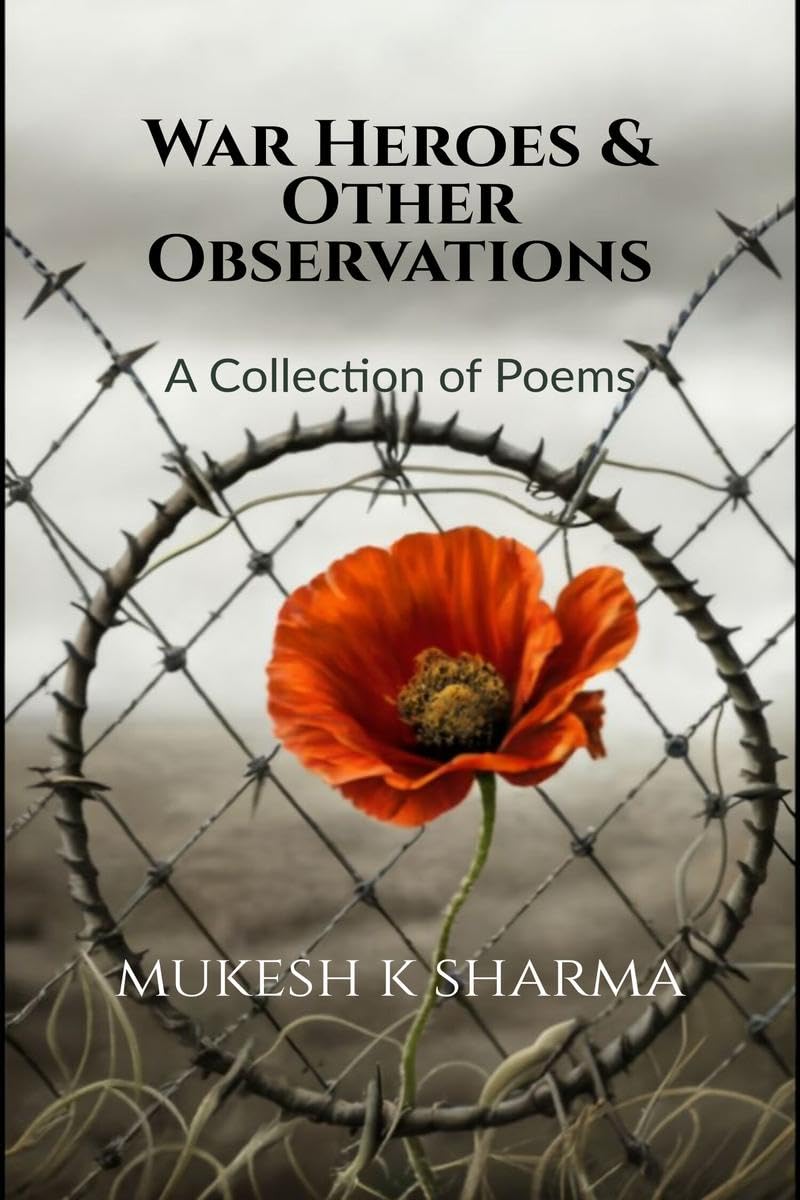
Poetry often articulates the unspoken depths of our shared humanity. This rings true in Mukesh K Sharma’s evocative collection “War Heroes and Other Observations”, which illuminates the stories of everyday heroes that shape our world.
About the Author
Mukesh K Sharma, an English lecturer by profession, brings to the fore a compilation that is both profound and moving. Drawing from the grand narratives of literature, Sharma finds inspiration in the everyday, the margins of grand tales, where the real stories of heroism reside.

It’s not the decorated war heroes who take center stage here but those clad in the resilience of the human spirit, whose tales Sharma seeks to voice. But he shifts the focus to the margins – to the authentic stories of resilience and courage that go unsung. Through accessible verse, he gives voice to these quiet heroes.
Themes That Resonate in “War Heroes”
“War Heroes and Other Observations” is more than just a poetry collection; it’s a mosaic of untold stories, whispered legacies, and unyielding courage. Mukesh’s work is a homage to the unsung heroes of war, those who don’t wear medals but showcase the resilience and enduring spirit of humanity. The poems weave a narrative that speaks to the complexities of life and the often-overlooked acts of quiet heroism. The impetus for this anthology is deeply personal for Sharma, serving as a tribute to his friend Bharat Bhushan, whose life and tragic departure due to COVID-19 left a profound impact on the author.
- The unrecognized valor of ordinary people
- The imprint of loss and grief
- The endurance of hope amid adversity
- The nuances of the human experience
A Personal Tribute
This collection serves as a deeply personal memorial for a dear friend Bharat Bhushan, whose tragic passing from COVID-19 left a profound mark on the poet. We feel this grief poignantly woven throughout.
Writing Style and Literary Devices
Sharma’s verses are highly visual, using:
- Metaphors and imagery to transport readers imaginatively into each scene
- Narrative poems that reveal intimate human interactions
- Accessible language and everyday vocabulary that includes the reader
Universal Themes
While not tied to specific historical events, Sharma’s poems speak to universal experiences of war, loss, courage, and redemption. The collection resonates across cultures through highlighting our shared humanity.
Read This Too: Post-Structuralism: Landmark Figures and Concepts for UGC NET 2024
My Personal Reflections
I found this collection deeply affecting. Poems like “To Bharat Bhushan” offer an insightful window into Sharma’s emotional landscape. I appreciated how he captured life’s complexity through verse and prompted me to reflect on the meanings of courage and resilience in my own context. Sharma’s poetry made these abstract concepts intimate and relatable.
Final Verdict: A Moving Work of Literature
“War Heroes and Other Observations” lingers with you, exploring the indomitable human spirit through verse. For readers interested in war literature, personal narratives, and the endurance of hope, this collection comes highly recommended.
5 Impactful Poems from the Anthology
Here are 5 of the most memorable excerpts that moved me:
1. From “Homecoming”
Lanterns paint the fractured streets,
Sparklers weave a web of shattered light.
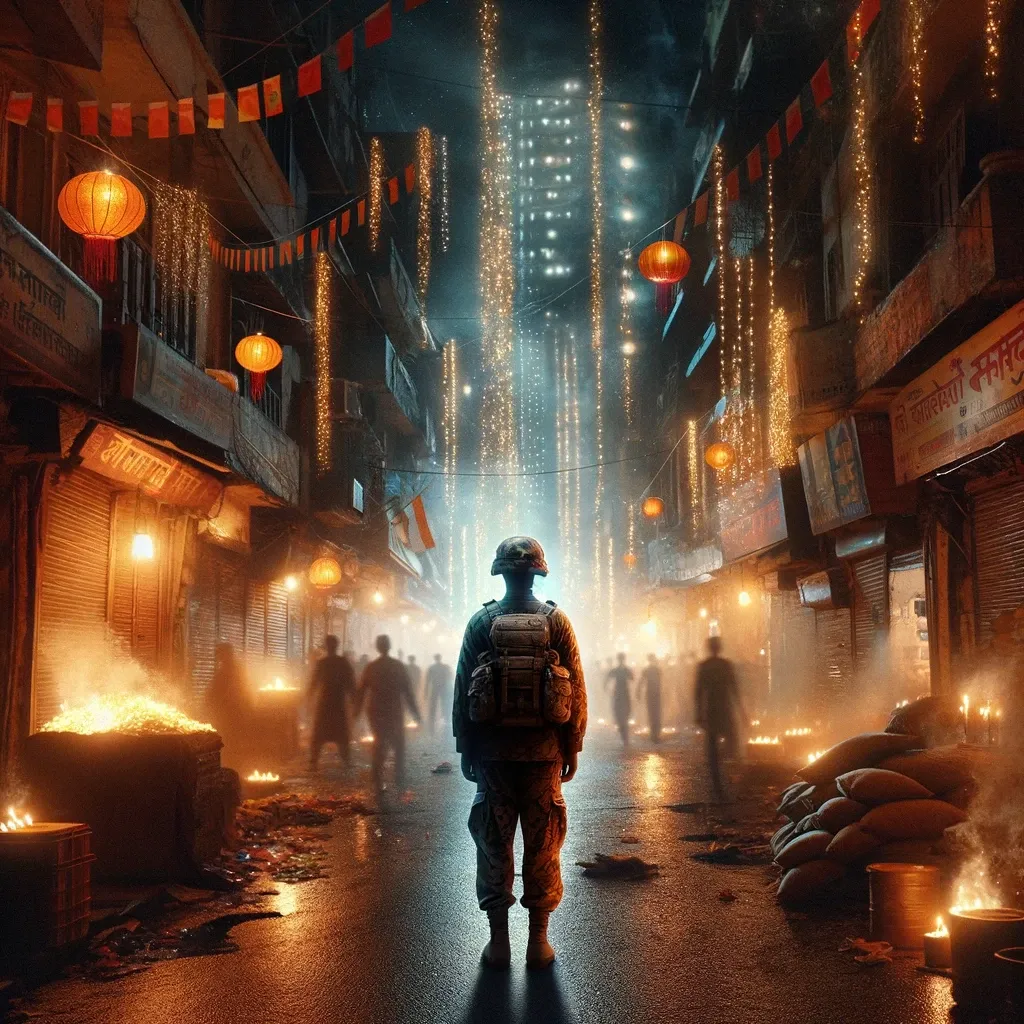
Sharma evokes a soldier’s fragmented homecoming through vivid imagery. The juxtaposition of festive lanterns with sparklers’ “shattered light” conveys the rupture between joyful celebration and the veteran’s scarred psyche. The poem explores the disorientation of a home become strange, turned cavernous by trauma’s echoes.
2. From “Desert Dreams”
To raise his sons with head unbowed and proud,
His weathered voice no longer lost within the crowd.
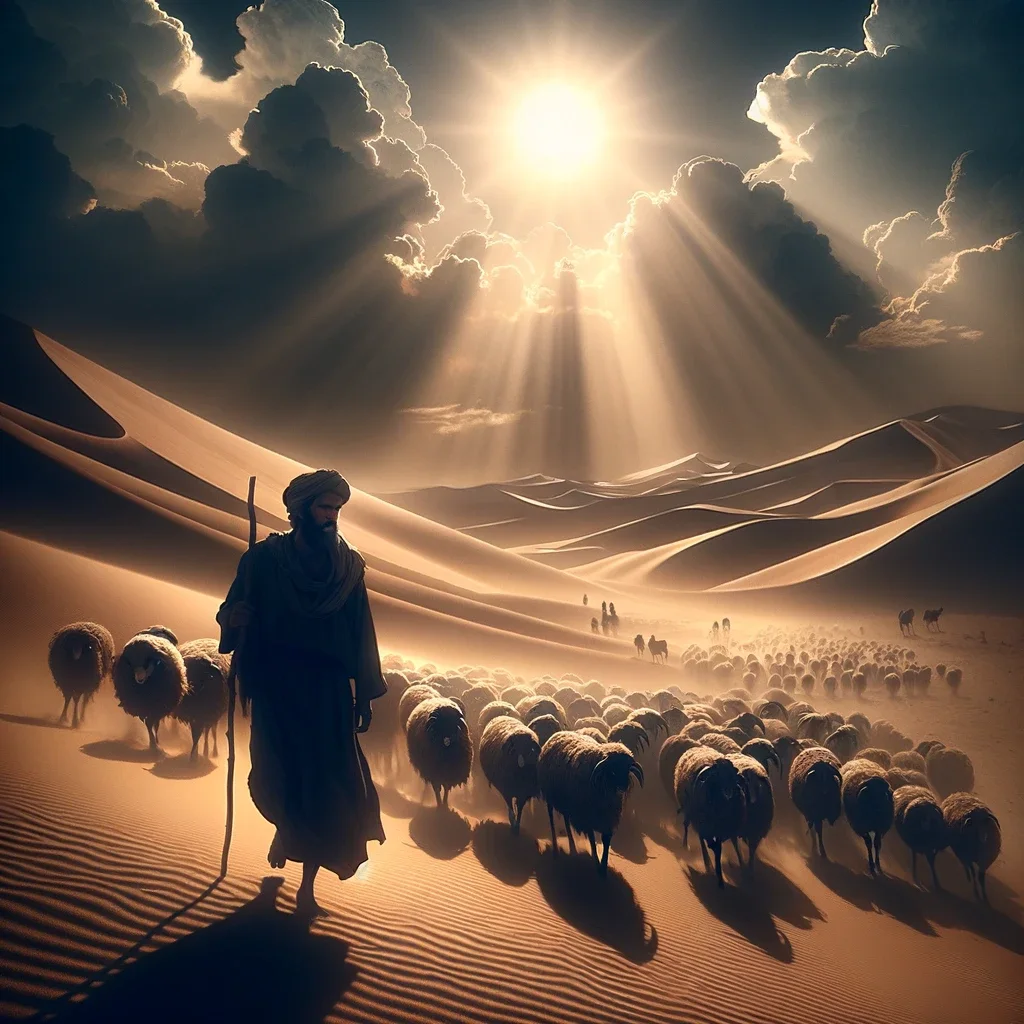
With simple yet vivid language, this excerpt captures a shepherd’s dreams of respect and honest livelihood in an unforgiving landscape. The lines expose his desire for fair trade, to raise his sons “with head unbowed and proud,” no longer muted within an indifferent crowd.
3. From “To Bharat Bhushan”
Ten days. A world collapsed, reduced to breath,
Husband, parents swallowed by that tide of death.
In this excerpt, raw grief bleeds through a widow’s disbelief at sudden loss. The crushing image of a “world collapsed” in just “ten days” lays bare the disorientation of bereavement. Sharma gives searing voice to her pain as she struggles to mother her sons through an endless veil of tears.
4. From “Caged”
Forgotten dreams, not vanquished but sleeping,
Whispering softly, their slow vigil keeping.

With muted grief, these lines reveal dreams buried but never forgotten under the weight of practicality and routine. Sharma evokes flickering “spectres” of alternate lives that walk beside us, echoing our compromises. Yet there is hope they may wake “in stolen moments” where passion briefly breaks free.
5. From “The Conquered”
Fire consumes, a force primeval, untamed,
And yet, in his veins, a kindred burn persists.

Sharma explores the psychology of a firefighter through the extended metaphor of battling a blaze. The excerpt conveys the intimacy between destruction and courage, as the firefighter wrestles with a force like the “kindred burn” within his own veins. It’s a meditation on the bravery forged through facing primal chaos.
Join the Conversation
I hope these excerpts convey the power of Sharma’s poetry. Get a copy here and share your thoughts below! Let’s keep highlighting the untold stories that inspire us.
[…] Read this too: War Heroes and Other Observations: Celebration of the Great Unsung Heroes […]
[…] psyche of a returning soldier in his poem “Homecoming,” from the 2024 collection “War Heroes and Other Observations.” This powerful piece stands out for its stark juxtaposition of celebratory imagery against […]
[…] in Pakistan, it deals with freedom, resilience, and the battle with oppression. Readers can’t stop raving about its heartfelt storytelling and relatable characters. By raising […]
[…] Improved availability of quality learning materials […]
[…] a reflection of ongoing struggles for equality and justice. His journey reveals that the fight for freedom went beyond breaking physical chains. It also sought to change hearts and […]
[…] Mr. Lamb, a kind and wise man, tries to make Derry feel comfortable. We learn that Derry has acid burns on one side of his face, which makes him self-conscious. Mr. Lamb, who has a tin leg, doesn’t react to Derry’s appearance like most people do. Instead, he talks about his garden, bees, and life, showing Derry that everything has value. He also tells him the importance of standing in the face of adversity. […]
[…] Symbols such as the hand and paper in the poem are rife with meaning. The hand isn’t just a hand; it’s power incarnate, acting on its own, signing away lives. The paper is more than a document; it’s the silent witness to the brutality of war. […]
[…] Mukesh K. Sharma‘s “Takshaka: The Last Guardian” accomplishes what the best mythological retellings do—it honors the original material while finding new relevance for contemporary readers. By shifting perspective to the traditionally villainous serpent king, Sharma creates a thought-provoking exploration of how narratives shape our understanding of justice, identity, and moral responsibility. […]