What is Saussurean structuralism?
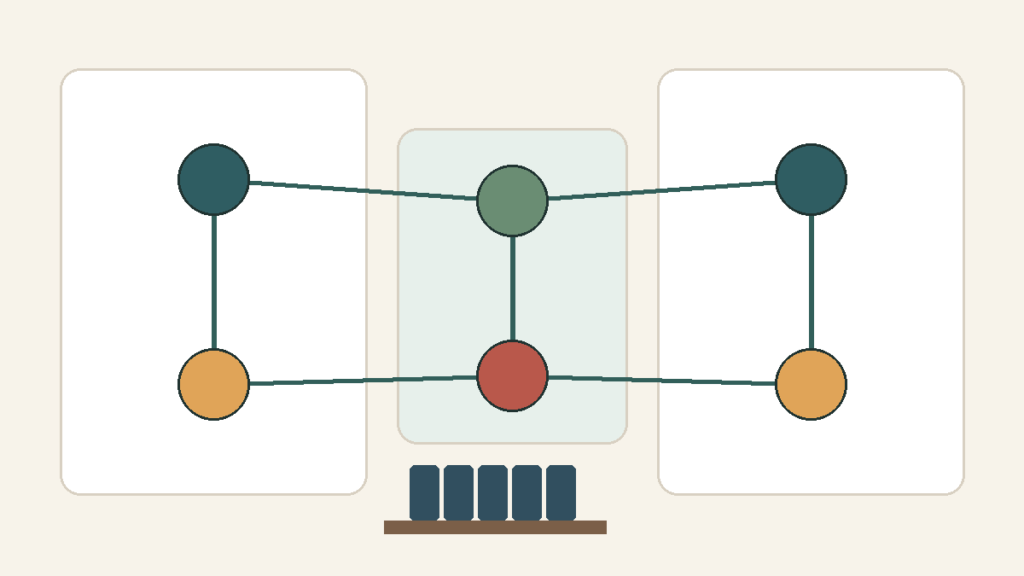
Saussurean structuralism is the idea that language works as a system of differences. A word does not carry meaning because it has a natural connection with an object. It gets meaning because it differs from other words inside the language system.
For UGC NET English and RPSC First Grade English, Saussurean structuralism is the starting point for structuralism. If you understand Saussure clearly, later topics like semiotics, Roland Barthes, narratology, and deconstruction become much easier.
The basic flow is simple:
- Language is a system, not a list of names.
- Signs are made of signifier and signified.
- Meaning depends on difference.
- The structure behind speech is more important than one person’s single utterance.
Ferdinand de Saussure explained these ideas in Course in General Linguistics, published after his death in 1916 from his students’ lecture notes. That book changed linguistics and gave literary critics a new way to think about meaning.
Who was Ferdinand de Saussure?
Ferdinand de Saussure was a Swiss linguist whose work shaped modern linguistics and structuralism. He did not write Course in General Linguistics as a finished book himself. His students, mainly Charles Bally and Albert Sechehaye, compiled it from lecture notes after his death.
This matters because Saussure’s influence is larger than a single discipline. Linguistics borrowed from him directly. Literary theory borrowed from him through structuralism and semiotics. Cultural theory borrowed from him by treating clothes, rituals, myths, films, and social customs as sign systems.
For exam answers, do not write only that Saussure was the father of modern linguistics. Add the reason. He shifted attention from the history of words to the structure of language at a given time.
That shift is the heart of Saussurean structuralism, and it is the reason students should not treat the topic as only a linguistics note.
What is the difference between langue and parole?
Langue means the language system shared by a community. Parole means actual speech or individual use of language.
This distinction is one of Saussure’s most important ideas. When you speak a sentence, that sentence is parole. But the grammar, vocabulary, and rules that make your sentence possible belong to langue.
Think of chess. One move in a game is like parole. The whole rule system of chess is like langue. A move has meaning only because the game has rules.
For literature students, this distinction teaches an important lesson. A poem, a novel, or a sentence does not stand alone. It works inside a larger system of language, genre, convention, and cultural codes.
When I teach this topic, I tell students to remember one line: parole is what is spoken, langue is what makes speech possible.
What are signifier and signified?
For Saussure, a linguistic sign has two parts:
- Signifier: the sound pattern or written form, such as the word “tree”
- Signified: the concept or mental idea of a tree
The signifier is not the physical tree. The signified is also not the physical tree. Together, they form the linguistic sign.
This point often confuses students because they think the word directly connects to the object. Saussure’s point is subtler. Language connects a sound pattern with a concept inside the mind. The real-world object is outside the sign.
The relation between signifier and signified is arbitrary. There is no natural reason why the concept of a tree must be called “tree” in English. Hindi, French, and Sanskrit use different sound patterns for similar concepts.
For revision, remember this clearly: meaning is not natural. It is produced by a system of signs.
Why does Saussure say meaning depends on difference?
Saussure argues that language is based on difference. A word means what it means because it is not another word.
The word “cat” is meaningful because it differs from “bat,” “cap,” “dog,” and thousands of other signs. The difference may be sound, concept, or position inside the system. Meaning comes from relations, not from isolated words.
This is why structuralism became so important in literary theory. Critics began to ask how texts produce meaning through relationships. A character has meaning in relation to other characters. A symbol has meaning in relation to other symbols. A genre has meaning because it follows or breaks expected patterns.
This approach is useful in exam answers because it gives you a strong conceptual sentence: Saussurean structuralism studies the relations that make meaning possible.
You can connect this idea with our master guide on Structuralism in Literary Theory for a broader revision path covering semiotics, narratology, and major theorists.
What is synchronic and diachronic study?
Saussure separates synchronic study from diachronic study.
Synchronic study looks at language at one point in time. Diachronic study looks at language across history.
Before Saussure, much language study focused on historical development. Scholars studied how words changed over time. Saussure did not reject history, but he argued that the language system at a given moment also needs study.
For example, a synchronic study of modern English asks how English works now. A diachronic study asks how English developed from Old English, Middle English, and later forms.
This distinction matters for literary theory because structuralists often focus on the system behind a text. They ask how meaning is arranged at the level of structure, code, and relation.
How did Saussure influence literary theory?
Saussurean structuralism gave literary theory a method for thinking about signs and systems. Once critics accepted that language is a structure of differences, they began applying the same logic to literature.
Structuralist critics studied myths, narratives, genres, and symbols as systems. They did not ask only what a text means. They asked how meaning is produced.
This is why Saussure stands behind later critics like Roland Barthes, Claude Levi-Strauss, Roman Jakobson, and Tzvetan Todorov. These critics extended structural thinking beyond linguistics into culture and literature.
For a student, the best way to revise this influence is to move in order:
- Saussure and language
- Signs and difference
- Structuralism in literature
- Semiotics and culture
- Barthes and poststructuralist questions
You can use the literary theory guide as a wider map. For the linguistic background, the Britannica note on Ferdinand de Saussure is a useful external reference.
What should students remember for exams?
Keep these points ready for short notes and MCQs:
- Saussure was a Swiss linguist.
- Course in General Linguistics was published in 1916.
- Langue is the language system.
- Parole is individual speech.
- The sign has two parts: signifier and signified.
- The relation between signifier and signified is arbitrary.
- Meaning depends on difference within a system.
- Synchronic study looks at language at one time.
- Diachronic study looks at historical development.
- Saussure influenced structuralism, semiotics, and modern literary theory.
If you remember these points, you can handle most exam questions on Saussurean structuralism without mixing it up with later semiotics.
Frequently Asked Questions
What is Saussurean structuralism in simple words?
Saussurean structuralism means that language works as a system. Words get meaning through their relation and difference from other words, not through a natural link with objects.
What is the difference between langue and parole?
Langue is the shared language system. Parole is the individual act of speaking or writing.
What are signifier and signified?
The signifier is the sound or written form of a word. The signified is the concept that the word brings to mind.
Why is Saussure important for literary theory?
Saussure helped critics think of literature as a system of signs. His ideas shaped structuralism, semiotics, and later poststructuralist theory.
Is Saussure important for UGC NET English?
Yes. Saussure is important for questions on linguistics, structuralism, semiotics, and literary theory.
Conclusion
Saussurean structuralism is important because it teaches students how meaning is produced by structure. Language is not a collection of separate words. It is a system where signs gain value through difference.
For UGC NET English and RPSC First Grade English, focus on langue, parole, signifier, signified, arbitrariness, difference, and synchronic study. These terms form the foundation of structuralism. For structured revision, continue with the Smart Reader material on LitGram AI.
1 response