What is a linguistic sign?
A linguistic sign is the basic unit of meaning in Saussure’s theory of language, and the linguistic sign is the starting point for structuralism. It joins a sound pattern with a concept. The word does not directly attach itself to the thing in the world.
For example, the word “rose” has a sound pattern and a mental concept. The flower itself is not inside the sign. The sign works because a language community has accepted that this sound pattern refers to that concept.
This is a simple point, but it changes how we understand language and why the linguistic sign matters in literary theory. Meaning is not natural. It is made through convention and difference.
For UGC NET English, RPSC First Grade English, and literary theory papers, the linguistic sign is a core topic. It is the base from which structuralism and semiotics grow.
What are the two parts of the linguistic sign?
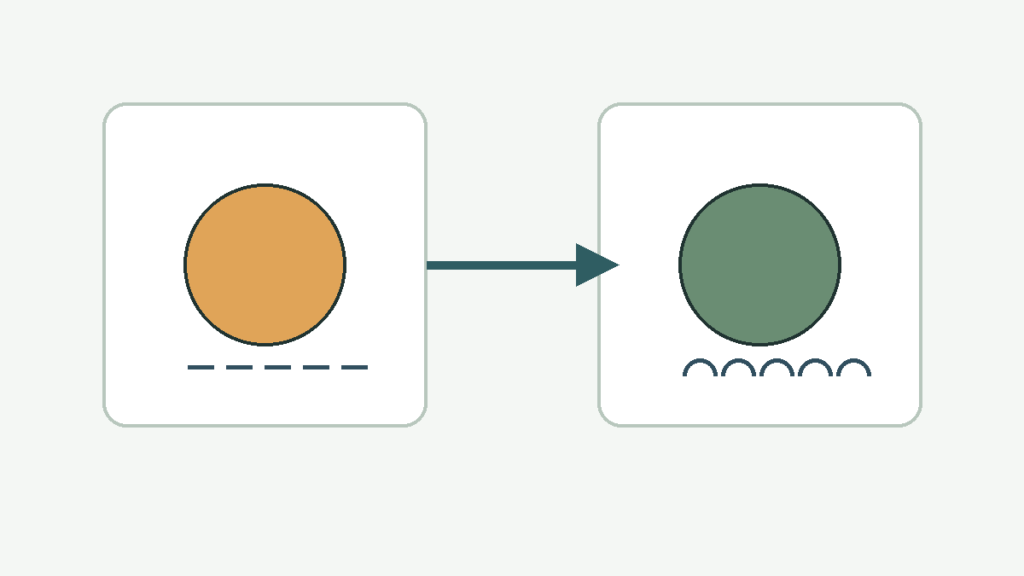
Saussure says the linguistic sign has two parts: signifier and signified.
The signifier is the sound image or written form. The signified is the concept. Together, they form the sign.
Use this example:
- Signifier: the written word “book” or its sound pattern
- Signified: the mental concept of a book
The signifier is not the physical object. The signified is not the physical object either. The sign is a mental and linguistic relation.
This is why Saussure’s theory is useful for literary criticism. It trains us to ask how meaning is formed through signs, not simply what a word points to in the world.
Why is the linguistic sign arbitrary?
The linguistic sign is arbitrary because there is no natural connection between the signifier and the signified.
There is no natural reason why the concept of a book must be represented by the English sound “book.” Other languages use different sound patterns. The object does not demand one fixed name.
This does not mean language is random in daily use. Once a language community accepts a sign, that sign becomes stable enough for communication. But its origin is conventional, not natural.
This point is very important in exams because the linguistic sign often appears in both theory questions and MCQs. If a question asks about arbitrariness, write clearly that the relation between signifier and signified is based on social convention.
The arbitrary sign also explains why translation is possible but never perfectly mechanical. Languages divide meaning differently.
Why does Saussure say meaning comes from difference?
For Saussure, signs do not have meaning in isolation. They have value because they differ from other signs in the language system.
The word “ship” means what it means partly because it is not “sheep,” “shop,” “boat,” or “car.” Its sound and concept are placed inside a network of differences.
This idea is the real strength of Saussurean theory, and it explains why the linguistic sign is never isolated. It moves us away from single-word meaning and toward system-based meaning.
Literary theory uses this insight often. A symbol in a poem gains meaning because of its relation to other images. A character gains meaning because of contrast with other characters. A genre gains meaning because readers know its conventions.
This is why structuralism in literary theory begins with Saussure.
How is the linguistic sign different from a symbol?
Students often confuse sign and symbol. In ordinary language, we use these words loosely. In Saussure’s theory, the linguistic sign has a specific meaning.
A linguistic sign joins signifier and signified through convention. A symbol may retain some natural or cultural association with what it represents.
For example, a balance scale may symbolize justice because of an understandable visual connection. But the word “justice” has no natural connection with the concept. Its meaning comes from the language system.
Saussure prefers the term sign because it avoids the assumption of natural resemblance. The linguistic sign is not like a picture. It works through difference, convention, and shared use.
This distinction is useful for semiotics. Later thinkers study many kinds of signs, including images, gestures, myths, fashion, and advertisements.
How does the linguistic sign help in literary analysis?
The linguistic sign helps students read literature as a structured system of meaning. It reminds us that words do not simply carry fixed meanings from dictionary to page.
In a poem, one word may gather meaning from sound, placement, repetition, contrast, and context. A word can also become important because it differs from another word the poem avoids.
This is especially useful in close reading. When you analyse a poem, do not only write the dictionary meaning. Ask how the word works inside the poem’s total structure.
For example, if a poem contrasts light and darkness, each sign gains value through the other. The meaning does not come from one word alone. It comes from the relation between signs.
That is a structuralist habit of reading.
What is the exam relevance of the linguistic sign?
The linguistic sign appears in many forms in English literature exams. It may appear directly as an MCQ on Saussure. It may appear indirectly in questions on structuralism, semiotics, or poststructuralism.
Prepare these short answer points:
- Saussure defines the sign as a union of signifier and signified.
- The signifier is the sound image or written form.
- The signified is the concept.
- The relation between them is arbitrary.
- Meaning depends on difference within the system.
- The sign is psychological, not a direct object-word relation.
If you can explain these points with one example, your answer will be clear and exam-ready.
How did later critics use Saussure’s idea?
Later critics took Saussure’s linguistic theory into literature and culture. Roland Barthes used sign theory to study myths and everyday cultural meanings. Claude Levi-Strauss used structural thinking to study myths and kinship systems. Poststructuralists later questioned whether signs can ever produce stable meaning.
This is why Saussure remains important even when a later critic disagrees with him. His model created the vocabulary that many later theories used, revised, or challenged.
For a strong answer, connect the linguistic sign to the larger movement. Saussure gives structuralism its base. Structuralism leads to semiotics. Semiotics leads to broader cultural analysis.
You can revise this sequence through the guide to literary theory and criticism. For an external reference on Saussure, the Britannica page on Ferdinand de Saussure is useful.
Frequently Asked Questions
What is the linguistic sign in Saussure’s theory?
The linguistic sign is the union of signifier and signified. It joins a sound pattern or written form with a concept.
What is a signifier?
A signifier is the sound image or written form of a word. For example, the letters and sound of “tree” form the signifier.
What is a signified?
A signified is the concept linked with the signifier. It is the idea that comes to mind when we hear or read the word.
Why is the linguistic sign arbitrary?
It is arbitrary because there is no natural connection between the word and the concept. The connection is made by social convention.
Why is the linguistic sign important for UGC NET English?
It is important because it is the foundation of Saussurean structuralism, semiotics, and many later theories of meaning.
Conclusion
The linguistic sign is one of the most important concepts in modern theory. It shows that meaning is made through signs, convention, and difference.
For exam revision, remember signifier, signified, arbitrariness, and difference. These four ideas will help you understand structuralism, semiotics, and later literary theory. For a structured study path, continue with the Smart Reader notes on LitGram AI.