Structuralism in literary theory, influenced by modern linguistics and cultural studies, delves into the underlying systems that govern narratives and texts, offering a unique perspective on storytelling, communication, and discourse. By dissecting the relationships between elements like characters, symbols, and themes, structuralism provides a framework for understanding the intricate tapestries woven by authors and literary texts. Engaging in rigorous evidence analysis with a clear thesis is pivotal to unraveling the complexities embedded in works of literature through this lens.
📌 Quick Summary: What is Structuralism in Literary Theory?
Structuralism is a 20th-century theoretical movement that views literature not as an isolated expression of an author’s genius, but as part of a larger, rule-governed system of signs. Originating from Ferdinand de Saussure’s linguistics, it argues that meaning is not inherent in words or texts; rather, meaning is produced entirely through relationships, differences, and underlying structural codes.
- Core Principle: Things cannot be understood in isolation—they must be seen in the context of larger structures (langue, genre, cultural codes).
- Key Founders: Ferdinand de Saussure (Linguistics), Claude Lévi-Strauss (Anthropology & Myth), Roland Barthes (Semiotics & Cultural Signs).
- Key Narratologists: Vladimir Propp (31 folktale functions), A.J. Greimas (Actantial model), Gérard Genette (Narrative levels & focalization).
- Exam Anchor (UGC NET / RPSC): Focus on Saussure’s arbitrary sign, langue vs. parole, binary oppositions, and the shift from author to system.
👉 Looking specifically for Saussure’s linguistic concepts? Read our dedicated companion guide: Saussurean Structuralism for UGC NET English →
Table of Contents
Understanding Structuralism
Key Concepts
Structuralism in literary theory delves into underlying structures within texts. It focuses on dissecting language systems and discourse present in literary works. Notable figures associated with structuralism include Ferdinand de Saussure and Claude Lévi-Strauss, who have significantly contributed to this analytical approach.
When exploring structuralism, scholars investigate how the structure of language influences the interpretation of literary texts. By analyzing the organization of words, phrases, and sentences within literature, they aim to unveil how language shapes meaning. They delve into understanding the intricate relationship between language usage, discourse, and storytelling techniques employed by authors.
Language Structure
In structuralist analysis in literary studies, attention is directed towards comprehending how authors utilize signs and symbols to convey deeper meanings in their works. By scrutinizing these sign systems embedded in texts, scholars unravel the intricate ways through which authors communicate ideas symbolically in literary studies. This exploration enables a detailed examination of various sign systems employed by writers in literary studies to enrich their narratives.
Exploring structuralism’s role in literary criticism unveils its significant influence on interpreting texts from a unique perspective. Through structuralist approaches, critics can uncover hidden layers of meaning embedded within literary pieces that may not be apparent at first glance. The impact of structuralism extends beyond mere analysis; it reshapes how readers perceive and interpret diverse forms of literature and literary studies.
Ferdinand De Saussure’s Contributions
Langue and Parole
Ferdinand de Saussure, a prominent figure in structuralism in literary theory, introduced the concepts of langue and parole. Langue refers to the language system in literary studies, while parole pertains to individual speech acts. When analyzing literature through structuralism in literary studies, understanding how langue (the underlying structure of language) and parole (the actual speech or text) interact is crucial. By examining how these elements intertwine, scholars can uncover deeper meanings within texts and studies. For instance, in a poem, the choice of words (parole) may reflect broader societal structures (langue), shedding light on themes or messages.
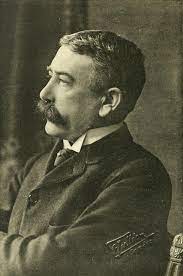
Saussure emphasized that comprehending both langue and parole is essential for unraveling the complexities of literary works. The significance lies in recognizing that individual expressions (parole) are influenced by broader linguistic systems (langue). This distinction allows scholars to delve into not just what is being said but also why it is communicated in a particular way. In literary analysis, this approach aids in deciphering symbolism, metaphors, and narrative structures by considering how they relate to the underlying language system.
Read This Too: Structuralism: Ideas, Applications, and Limitations in 5 Minutes
Signifier and Signified
Another key concept introduced by Saussure is the relationship between signifier and signified. The signifier represents the form or sound of a word or symbol, while the signified embodies the concept associated with that form or sound. This relationship plays a fundamental role in shaping meaning within literature as it connects physical representations with abstract ideas. For example, when reading poetry, understanding how certain words evoke specific mental images demonstrates this interplay between signifiers (words themselves) and signifieds (concepts conveyed).
Analyzing how signifiers interact with their corresponding signifieds provides insights into how authors convey meaning through their choice of language constructs. By exploring this dynamic relationship within texts using structuralist principles pioneered by Saussure, literary critics can unearth layers of symbolism and metaphorical connotations embedded within written works.
Structuralism in Literary Analysis
Traditional vs Structural
Traditional literary analysis focuses on the content and themes of a text, while structuralism delves into the underlying structures that shape meaning. For example, when analyzing a poem traditionally, one might focus on its themes like love or nature. In contrast, a structuralist approach would analyze how the language and symbols within the poem create meaning.
The shift from traditional to structuralist perspectives challenges conventional interpretations by emphasizing the importance of relationships within a text rather than just its surface-level content. This shift encourages readers to explore how elements like language, symbols, and narrative structure work together to convey meaning in literature.
Formalism and New Criticism
Formalism and new criticism are critical approaches that focus on the form and internal workings of a literary text rather than external factors like authorial intent or historical context. These methods share similarities with structuralism, particularly in their emphasis on close reading and attention to textual details.
One key difference between formalist/new critical approaches and structuralism is that while formalists may focus more on elements like meter or rhyme scheme in poetry, structuralists look at larger patterns of signification across texts. Despite these differences, formalist theories have influenced structuralist approaches by highlighting the significance of form in shaping meaning within literature.
Broader Theoretical Contexts
Marxism and Critical Theory
Marxism plays a significant role in structuralism in literary theory by offering insights into power dynamics and social structures within texts. By applying Marxist perspectives, scholars can uncover underlying class struggles, economic disparities, and power relations depicted in literary works. This approach intersects with critical theory, which delves into the deeper meanings behind texts beyond surface-level interpretations. When analyzing literature through a structuralist lens informed by Marxism, readers can explore how socio-political contexts influence characters’ actions, relationships, and societal norms portrayed in the text.
Cultural studies also intersect with structuralism to provide a comprehensive understanding of how cultural context shapes interpretations of literary works. By examining the cultural influences present in texts, scholars can gain insight into how societal beliefs, values, and norms impact the creation and reception of literature. Understanding these connections allows for a more nuanced analysis of how culture influences language use, narrative structures, and character development within literary pieces. Cultural studies offer a valuable framework for exploring diverse perspectives on texts while acknowledging the multifaceted nature of interpretation influenced by varying cultural backgrounds.
Structuralism’s Impact on Other Disciplines
Anthropology Application
Structuralism in literary theory extends its reach to anthropology, drawing parallels between the two disciplines. By applying anthropological concepts to literary analysis, scholars delve into the cultural underpinnings of texts. For example, when examining a novel through an anthropological lens, one might explore how societal norms and values manifest in characters’ behaviors.
This approach allows for a deeper understanding of literature by uncovering hidden cultural meanings embedded within texts. Anthropological theories provide tools for dissecting narratives beyond surface-level interpretations. Analyzing literature through an anthropological framework enriches the reading experience by shedding light on the intricate connections between culture and storytelling.
- Reveals hidden cultural nuances in literary works
- Enhances interpretation of texts through sociocultural perspectives
Linguistics Influence
The influence of linguistics on structuralist literary theory is profound, shaping how scholars analyze and interpret texts. Linguistic principles play a pivotal role in structuralist analysis by emphasizing language structures and systems within literature. For instance, examining how narrative elements mirror linguistic constructs can unveil underlying patterns and meanings within a text.
Poststructuralism Evolution
New Historicism
New Historicism examines the relationship between historical context and structuralist literary theory. By understanding how history influences structuralist readings, scholars gain deeper insights into texts. This approach highlights the importance of considering societal norms, beliefs, and events when analyzing literature. For example, examining Shakespeare’s works through a new historicist lens can reveal how political dynamics of his time shaped his narratives.
Cultural Materialism within structuralist theory focuses on how material conditions impact textual interpretations. Scholars in this field explore how socio-economic factors influence the production and reception of literature. By delving into the material aspects surrounding a text’s creation, readers can uncover hidden meanings and messages embedded in the work. Understanding cultural materialism enhances our appreciation for how external factors shape literary works, offering a more holistic view of storytelling across different time periods and cultures.
Intersection with Identity Studies
Ethnic Studies
Ethnic studies intersect with structuralism in literary theory by emphasizing the significance of ethnicity in interpreting texts structurally. By delving into how race and identity are viewed within a structuralist framework, ethnic studies offer a unique perspective on analyzing literature. For example, when examining a text through an ethnic studies lens, one might focus on how cultural backgrounds influence character development or plot progression.
Moreover, the exploration of binary oppositions within ethnic groups can shed light on power dynamics and societal structures present in literary works. This approach allows for a deeper understanding of how structuralism interacts with themes of ethnicity and identity in literature.
- Emphasizes importance of ethnicity
- Analyzes race within structuralist framework
- Explores cultural influences on texts
Gender and Queer Theory
Gender roles are scrutinized through the lens of structuralism, providing insights into how traditional norms shape characters and narratives. By intertwining gender, sexuality, and structure analysis, scholars can uncover hidden meanings embedded in texts. For instance, examining how binary oppositions such as male/female or masculine/feminine play out in literary works reveals underlying power struggles.
Furthermore, queer theory challenges conventional structures by offering alternative interpretations that break free from normative constraints. This reevaluation opens up new avenues for understanding characters’ motivations and relationships beyond traditional gender binaries.
Notable Structuralist Thinkers
Lévi-Strauss Influence
Claude Lévi-Strauss, a prominent figure in structuralism in literary theory, made significant contributions. His theories are crucial for understanding how narratives are structured. For instance, his ideas on binary oppositions reveal the underlying patterns within texts. When analyzing literature through a structuralist lens inspired by Lévi-Strauss, scholars focus on identifying these opposing elements to uncover deeper meanings. This approach helps readers appreciate the intricate design and interconnectedness of various components within a text.
Applying Lévi-Strauss’s theories to literary analysis offers fresh insights into storytelling techniques and themes present in works of fiction. By examining how different story elements interact and relate to one another, critics can unveil hidden messages or symbolic representations embedded in the narrative structure. For example, exploring the binary oppositions of good versus evil or nature versus civilization can shed light on the author’s intended message or commentary on society.
Lacan and Piaget Impact
Jacques Lacan and Jean Piaget have also left their mark on structuralism through their respective fields of psychoanalysis and cognitive development. Lacan’s psychoanalytic theories delve into the subconscious mind’s influence on language formation and narrative construction. By incorporating Lacanian concepts such as the mirror stage or symbolic order into literary analysis, scholars gain insight into characters’ motivations, desires, and conflicts at a deeper psychological level.
On the other hand, Piaget’s cognitive development theories offer a unique perspective on how individuals perceive and interpret textual structures based on their intellectual growth stages. Applying Piagetian principles to analyze text structure allows researchers to understand how readers engage with narratives differently depending on their cognitive abilities. This approach highlights that readers may interpret texts based not only on content but also through lenses shaped by their cognitive developmental stages.
Binary Oppositions
Levi-Strauss identified binary oppositions as the engine of meaning in myths and culture. These are paired contrasts: nature/culture, raw/cooked, light/dark, good/evil, male/female. The human mind thinks in pairs. It makes sense of the world by dividing it into opposites.
In literature, binary oppositions organize plots and themes. Take Romeo and Juliet. The play runs on love/hate, life/death, family loyalty/individual desire. The plot moves through these oppositions and attempts to resolve them. The resolution comes through tragedy. Structuralist analysis maps these oppositions to reveal the text’s deep structure.
Levi-Strauss did the same for the Oedipus myth. He read it as a system of paired oppositions: overvaluing blood ties versus undervaluing them. The myth mediates a cultural contradiction. Literary critics borrowed this method widely. See [Internal link: post on Claude Levi-Strauss’s Structuralist Anthropology] for more on this.
Semiotics: Signs Beyond Language
Barthes extended Saussure’s model. In Mythologies (1957), he argued that whole cultural objects, advertisements, wrestling matches, toys, steak and chips, operate as sign systems. A black-and-white photograph of a soldier saluting a flag carries connotations of loyalty, nation, and empire. That second layer of meaning is what Barthes called myth.
Myth, for Barthes, is not a false story. It is a second-order sign system. A first-order sign is just the word or image. A second-order sign takes that first sign and loads it with ideology. Advertising and political language work this way all the time. Literature does too.
Umberto Eco developed Semiotics further. He argued that readers are always part of the sign system. A text is not a fixed meaning machine. It is an open field of codes that readers activate. His concept of the open text linked Semiotics to reader theory.
Structuralist Narratology
Structuralism also produced a science of narrative. Vladimir Propp’s Morphology of the Folktale (1928) analyzed 100 Russian folktales and found 31 fixed narrative functions. Characters might change but functions stay the same. A hero leaves home, gets tested, defeats a villain, returns transformed. This sequence underlies fairy tales worldwide.
Tzvetan Todorov built on this. He proposed that all narratives begin with equilibrium, move through disruption, and return to a new equilibrium. This three-part grammar is deep structure. It runs beneath the surface of novels, plays, and films.
Gerard Genette analyzed narrative time and voice. He separated story (what happens), narrative (how it is told), and narrating (the act of telling). His concepts of analepsis (flashback), prolepsis (flash-forward), focalization, and narrative levels are standard tools in text analysis today.
Roland Barthes in S/Z divided Balzac’s story Sarrasine into 561 lexias and applied five codes: proairetic (action), hermeneutic (mystery), semic (character traits), symbolic (oppositions), and cultural (shared knowledge). This is Structuralism at its most detailed.
Roman Jakobson contributed the communication model: every speech act involves an addresser, addressee, message, context, contact, and code. His six functions of language, referential, emotive, conative, phatic, metalingual, and poetic, are frequently tested. The poetic function focuses on the message for its own sake. It is what makes literary language different.
Structuralism Today
Current Interpretations
Structuralism in literary theory remains relevant today, with contemporary scholars applying its principles to various genres. By analyzing texts through a structural lens, scholars can uncover hidden meanings and patterns within the narrative. For example, when examining a novel using structuralism, one might focus on recurring symbols or themes that contribute to the overall meaning of the work. This approach allows for a deeper understanding of the text beyond just surface-level interpretations.
Scholars have evolved their interpretation methods over time, adapting structuralist principles to suit modern literary analysis. They explore new ways to apply structuralism across diverse genres such as poetry, drama, and even digital literature. By doing so, they expand the boundaries of traditional literary criticism and pave the way for innovative approaches in interpreting complex narratives. This evolution showcases how structuralism continues to shape literary scholarship in dynamic and exciting ways.
Criticisms and Relevance
While structuralism offers valuable insights into textual analysis, it is not without criticisms regarding its limitations. Some critics argue that a purely structural approach may overlook important aspects such as historical context or authorial intent when interpreting a text. Despite these critiques, many scholars still find structuralism relevant in modern literary theory due to its emphasis on uncovering underlying structures within narratives.
The ongoing relevance of structuralism lies in its ability to provide fresh perspectives on familiar texts and challenge conventional interpretations. Scholars navigate the balance between addressing criticisms leveled against structuralist approaches while recognizing its enduring impact on shaping contemporary literary theory practices. This delicate equilibrium ensures that structuralism continues to influence how we understand and analyze literature today.
Closing Thoughts
In exploring structuralism in literary theory, the analysis of language structures and systems reveals a profound influence on various disciplines. From De Saussure’s foundational contributions to the evolution into poststructuralism and intersections with identity studies, structuralism’s impact remains significant today. Notable thinkers have shaped this theoretical framework, highlighting its enduring relevance and adaptability across academic domains. Understanding structuralism offers a lens to decipher complexities in texts and societal constructs, urging scholars to delve deeper into its implications.
For those intrigued by the intricate web of language and meaning, delving into structuralism provides a gateway to enriched literary interpretations and critical analyses. Embracing the legacy of structuralist thought prompts continued exploration and application in contemporary contexts, fostering a nuanced understanding of communication, culture, and interpretation.
Important Quotes from Theorists
“In language there are only differences without positive terms.” — Ferdinand de Saussure, Course in General Linguistics
This is the most cited Saussure line. Signs have no inherent meaning. They mean because they differ from other signs. Exams ask this for Semiotics basics. Know it precisely.
“Myth is a type of speech… it is a system of communication, it is a message.” — Roland Barthes, Mythologies
Barthes redefined myth as not a story of the past but a mode of signification in the present. Ideology works through mythic speech. This quote tests Barthes’ cultural theory.
“Structural analysis reveals that all myths share a common deep structure of binary oppositions.” — Claude Levi-Strauss, Structural Anthropology
Levi-Strauss made the claim that myths are not random. They encode universal mental structures. This is the core of his contribution and a regular exam point.
“The structuralist activity involves two typical operations: dissection and articulation.” — Roland Barthes, The Structuralist Activity
Barthes saw Structuralism as a practice, not a doctrine. You break a text into units, then see how they fit together. This quote shows how method-driven the theory is.
“The narrative does not show, does not imitate… the function of narrative is not to represent, it is to constitute a spectacle.” — Roland Barthes, Introduction to the Structural Analysis of Narratives
This challenges realism. Narrative does not copy life. It constructs a structured experience. Know this for narratology questions.
Exam Relevance: Key Points for Competitive Exams
This theory cluster appears in exams in several specific ways. First, questions test the Saussurean sign: know signifier, signified, arbitrary link, relational meaning, langue vs. parole. These are direct definition questions.
Second, Levi-Strauss and binary oppositions appear often. Be ready to apply binaries to a text. Show how oppositions generate the narrative’s tension. Oedipus and Romeo and Juliet are go-to examples.
Third, Barthes tests well in two ways: myth theory (second-order sign systems, ideology) and narratology (the five codes in S/Z, readerly vs. writerly texts). Know both. For a focused breakdown, see this post.
Fourth, narratology questions use Propp, Todorov, and Genette. Know Propp’s 31 functions and the helper/villain/hero roles. Know Todorov’s equilibrium model. Know Genette’s story-narrative-narrating triad.
Fifth, Jakobson appears for his six communication functions, especially the poetic function. He also appears in questions on metaphor and metonymy as axes of language.
Related theories to know alongside this: Poststructuralism (Derrida questioned fixed sign systems), Reader Response Theory (Eco’s open text), and Psychoanalytic Criticism (Lacan used Saussurean linguistics for the unconscious). See [Internal link: post on Poststructuralism and Deconstruction] for how Structuralism was challenged.
Quick Revision: Key Points to Remember
- Structuralism treats literature as a sign system, not as a record of authorial intention.
- Saussure’s sign has two parts: the signifier (form) and the signified (concept); the link between them is arbitrary.
- Langue is the underlying rule system; parole is any single use of it; Structuralism studies langue.
- Binary oppositions (light/dark, good/evil) are the primary engine of meaning in texts and myths.
- Levi-Strauss found universal deep structures in myths by mapping binary oppositions.
- Barthes showed that culture operates as myth: everyday objects carry ideology as second-order signs.
- Propp identified 31 narrative functions in folktales; all share the same deep structure.
- Todorov’s model: equilibrium, disruption, new equilibrium; this grammar underlies most narratives.
- Genette separated story, narrative, and narrating; gave us flashback, flash-forward, and focalization.
- Jakobson’s poetic function focuses on the message itself; it defines what makes literary language literary.
Frequently Asked Questions
What is structuralism in literary theory?
Structuralism in literary theory examines how texts are structured and how those structures convey meaning. It focuses on underlying patterns, systems, and relationships within literature.
Who is Ferdinand De Saussure and what were his contributions to structuralism?
Ferdinand de Saussure was a Swiss linguist known for his work on semiotics. His contributions to structuralism include the idea of the signifier (word) and signified (concept), emphasizing language’s role in shaping perception.
How does structuralism impact literary analysis?
Structuralism helps analyze literature by uncovering hidden structures, symbols, and codes that influence meaning. It emphasizes the interconnectedness of elements within a text and explores deeper layers of interpretation.
What are some broader theoretical contexts related to structuralism?
Structuralism intersects with fields like anthropology, philosophy, psychology, and sociology. It influences theories on language, culture, society, and cognition by highlighting underlying structures that shape human experiences.
How has structuralism influenced other disciplines beyond literature?
Structuralism has impacted fields such as anthropology, linguistics, semiotics, and cultural studies by introducing methods to analyze underlying structures and systems present in various phenomena.
7 responses